Buyers spend more time evaluating bathrooms than almost any other room. According to Remodeling Magazine’s Cost vs. Value report, a midrange bathroom remodel recoups roughly 66% of its cost at resale nationally, and in Texas markets where buyers expect updated finishes, the gap between a dated bath and a fresh one shows up directly in offers. A moldy grout line or a 1990s oak vanity doesn’t just look bad; it signals deferred maintenance.
Austin, Lockhart, and the Hill Country corridor have seen home prices cool from their 2022 peaks, which means buyers are pickier than they were two years ago. A full primary bathroom gut typically runs $15,000-$40,000 in Central Texas depending on scope, but you don’t need to spend that to move the needle. The projects that pay off are the ones buyers can see in listing photos and feel when they walk in: a vanity that doesn’t wobble, tile that isn’t cracked, light that actually works.
Table of Contents
High-Impact Changes: The Non-Negotiables
If the budget is tight, focus here first, these changes show up in listing photos and shape buyer impressions before they ever set foot in the house.
1. The Vanity and Countertops
Walk into any bathroom and your eyes go straight to the vanity. An old, low-profile oak cabinet with a discolored laminate top doesn’t just look dated, it tells buyers the bathroom hasn’t been touched in 20 years.
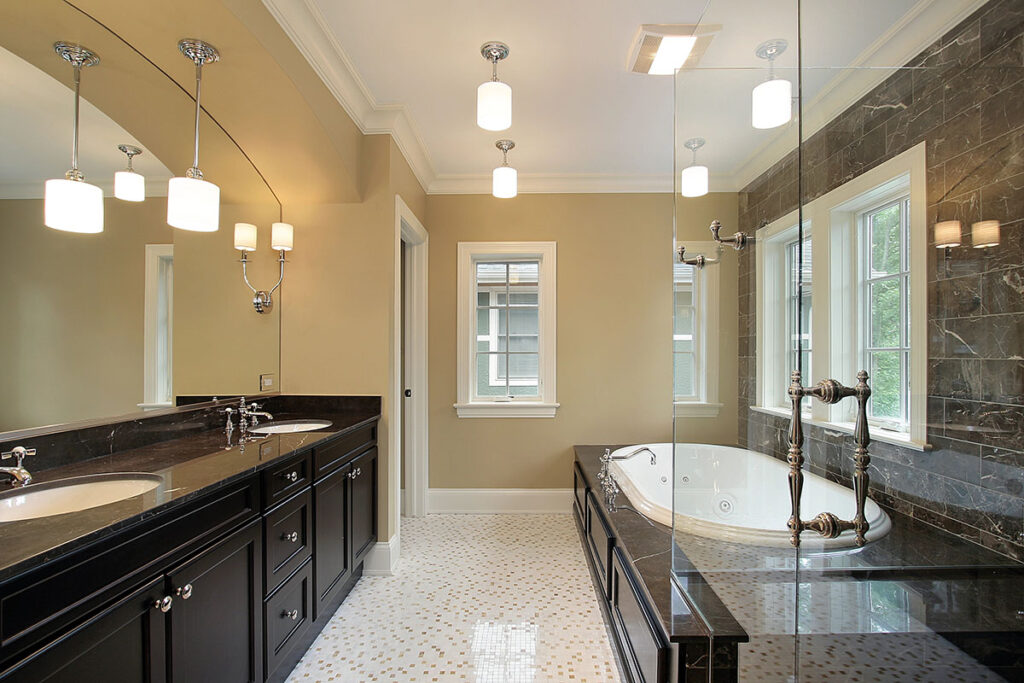
Replace it with a standard-height (34-36 inch) vanity with solid storage. In a primary bathroom, a double vanity consistently tops buyer wish lists, if the layout allows it, it’s worth the extra cost. Quartz is the most practical countertop choice right now: non-porous, low-maintenance, and visually clean. Swap the vanity and countertop together and the bathroom reads as new, even if nothing else changed.
2. Tile and Flooring
Cracked or stained tile can’t be dressed up. Dirty grout lines read as grimy to buyers even when the room is spotless, it’s one of those things that sticks in the brain from the listing photos.
Large-format floor tiles (12×24 or bigger) visually expand a small bathroom without major structural work. For shower surrounds, white subway tile is still the safest choice, it photographs well, costs less than custom options, and doesn’t alienate buyers with specific taste. If you’re opening up the walls anyway, don’t skip the waterproofing: a licensed contractor should handle it, and buyers who’ve been burned by water damage will ask about it during inspection.
3. Lighting
Bad lighting undermines everything else. A beautiful vanity and fresh tile look flat and cheap under a single dim overhead bulb.
Good bathroom lighting has at least two layers: overhead ambient light plus vanity-level task lighting, wall sconces or a bar fixture mounted above the mirror, that eliminates the face shadows a ceiling light alone creates. If the shower has a separate enclosure, a wet-rated light-and-fan combo is worth adding: it handles ventilation and makes the shower feel less like a cave. Stick with LED fixtures rated 3000K-4000K; that range gives the warmth of old incandescent bulbs without the energy cost.
Mid-Range Upgrades with Major Appeal
Once the fundamentals are solid, a few more targeted changes push the bathroom from “fine” to the kind of thing buyers mention by name when they call their agent.
Mismatched or corroded fixtures signal neglect before a buyer even tests the water pressure. Swapping faucets, showerheads, and towel bars to a single finish, brushed nickel and matte black are the two most buyer-neutral options right now, typically runs $150-$400 in hardware for a full bathroom, making it one of the better dollar-per-impression upgrades available.
A full tub replacement starts around $1,500 installed and can climb past $5,000 depending on the surround material, so it’s worth considering alternatives first. Professional reglazing runs roughly $300-$600 and, done well, holds up for 10-15 years on a tub that sees light use. The bigger visual win in most bathrooms is the shower door: swapping out opaque or framed panels for a clear, frameless glass enclosure removes the visual barrier that makes small bathrooms feel like closets, and it photographs well, which matters when buyers are scrolling listings before they ever book a showing.
Upgrades for the Rental Market
Renovation priorities for a Bell County rental bathroom differ from owner-occupied work in one fundamental way: you’re not designing for your taste, you’re designing for a tenant who will clean the bathroom however they clean bathrooms and a property manager who will turn it over between leases. Durability and cleanability are the only metrics that matter. That means no porous natural stone, no intricate mosaic grout patterns, and no surfaces that require specialty products to maintain. Large-format porcelain tile (24×24 or larger) cuts grout line length substantially, which is the single biggest driver of maintenance headaches in a rental bathroom.
WaterSense-labeled toilets use 1.28 gallons per flush versus the 3.5 gpf of pre-1994 models, and low-flow showerheads can cut bathroom water consumption by 20-30%, according to EPA estimates, worth real money if utilities are included in the lease. On finish colors, white, warm gray, and greige don’t photograph as “someone else’s bathroom,” which matters when a prospective tenant is scrolling listings at 11pm. Bold accent tile and statement colors can work in owner-occupied renovations, but they’re a gamble on a rental: one tenant who hates the look skips the showing entirely, and you’ve narrowed your pool for no durable reason.
FAQs
What is the average return on investment (ROI) for a bathroom remodel?
Remodeling Magazine’s annual Cost vs. Value report consistently puts the national average recoup for a mid-range bathroom remodel at roughly 55-70% of project cost at resale; upscale remodels tend to land at the lower end of that range, partly because high-end finishes in mid-tier markets don’t always translate into proportional sale prices. Those figures don’t capture the full picture, though. A dated bathroom that kills a deal, or forces a price reduction to compensate, can cost more than the renovation would have. Updated bathrooms also tend to reduce time on market, which carries its own value for sellers managing holding costs.
Should I focus on the primary bathroom or a secondary guest bathroom?
The primary bathroom almost always takes priority from a resale standpoint, it’s the room buyers evaluate against their own daily routine, not their guests’. Secondary bathrooms matter for overall condition and count, but buyers rarely weigh them equally. If budget is limited, put it in the primary. If you can do both, update the primary substantively and bring the guest bath to a clean, functional baseline. Consistent condition throughout the home reads better to buyers than one renovated room sitting next to one that feels neglected.
Should I choose trendy designs or timeless styles?
For a home you plan to sell within the next few years, timeless wins. In practical terms: subway tile, white or greige walls, and brushed nickel or chrome fixtures photograph well, date slowly, and don’t prompt buyers to mentally calculate what it would cost to replace what you just installed. Trendy choices, dark grout on light tile, statement wallpaper, bold vanity colors, can work beautifully in the right home and market, but they narrow your buyer pool. The goal is a bathroom where buyers picture themselves, not yours.
Is it better to have a bathtub or a large walk-in shower in the primary bathroom?
It depends on what else the house has. If the primary is the only bathroom with a tub, think hard before pulling it, families with young children treat a bathtub as non-negotiable, and removing the last one in the home narrows your buyer pool in a meaningful way. If a secondary bathroom already has a tub, converting the primary to a walk-in shower is one of the more consistently appealing upgrades you can make. Walk-ins photograph well, feel more open, and tend to resonate strongly with the move-up buyer demographic that dominates Central Texas purchases.
Does a bathroom remodel add value to my Texas home?
Usually, yes, though the return depends heavily on what you actually do. Remodeling magazine’s annual Cost vs. Value Report has consistently placed midrange bathroom remodels at 60-70% cost recoupment nationally, and in competitive Texas markets that figure tends to run higher when the work upgrades genuinely outdated features: worn tile, builder-grade vanities, or fixtures that signal the home hasn’t been touched in two decades. Chasing luxury finishes in a mid-tier neighborhood, on the other hand, rarely pencils out.
Should I remove the bathtub to make room for a larger shower?
If the home has at least one other bathroom with a tub, removing the primary tub is usually a safe trade. In the $400K-and-up range, buyers often prefer a well-designed walk-in over a tub that rarely gets used. The firm exception: if yours is the only tub in the house, keeping it matters. Families with young children won’t seriously consider a home without one, and that’s a large enough buyer segment that losing them isn’t worth the square footage.
What is the most expensive part of a bathroom remodel?
Plumbing, and specifically any work that moves fixtures. Relocating a toilet, shower drain, or sink even two or three feet means cutting into the subfloor, rerouting drain lines, and often bringing older pipe work up to current code. That scope alone can add $3,000 to $6,000 or more depending on what’s under the floor. The budget-smart alternative: keep everything exactly where it is and spend the money on tile, lighting, vanity, and hardware. Buyers can’t tell the difference in the layout, but they absolutely notice the finishes.
What bathroom colors are most popular for resale?
Whites, warm grays, and soft greiges consistently outperform bolder choices. The practical reason is listing photos, neutral bathrooms read clean and bright online, which shapes how buyers filter before they ever schedule a showing. Bold tile or paint can work beautifully in person but tends to register as a project in photos. Put your personality into things you can swap out: towels, a mirror, a plant. Let the walls and tile read as a blank canvas.
How long does a typical bathroom remodel take?
It depends on scope. A cosmetic refresh, new vanity, hardware, paint, can wrap in a few days. A mid-range remodel with new tile, updated fixtures, and a replaced toilet but no plumbing moves typically runs two to three weeks. A full gut with layout changes can stretch to six weeks or more. The variable most homeowners underestimate is material lead time: custom tile, specialty vanities, and certain fixtures can take three to six weeks just to arrive. Order everything before demo starts, or plan the schedule around what’s already on site.
Maximizing Market Appeal Through Renovation
The projects that hold their value are the ones that fix real problems, a cramped layout, outdated fixtures, poor lighting, no storage, not the ones chasing whatever finish is trending. A bathroom that’s clean, functional, and well-lit will sell faster and retain more value than one that’s dramatic but impractical. Make choices that work for daily use and photograph well. That’s a narrower brief than most people expect, but it’s the one that pays off when it matters.
Wondering how a remodel could affect your home’s value in today’s market? The Lonestar Realty Team works with buyers and sellers across the region and can give you a realistic read on what local buyers are prioritizing right now.